Eyes First: Ink Without a Net, Then One in Gouache
September 8, 2026
Back in Six Heads, Three Sheets I wrote that I seem to have consistent trouble with eyes, noses and mouths. Drawing whole heads and hoping the features sort themselves out hasn't got me very far, so I'm taking them one at a time, starting with the eyes. Each of these posts follows the same shape: pencil to learn the form, ink to test whether I've learned it, then one study in gouache to put the colour back in while it's fresh.
Pencil first: learning the form
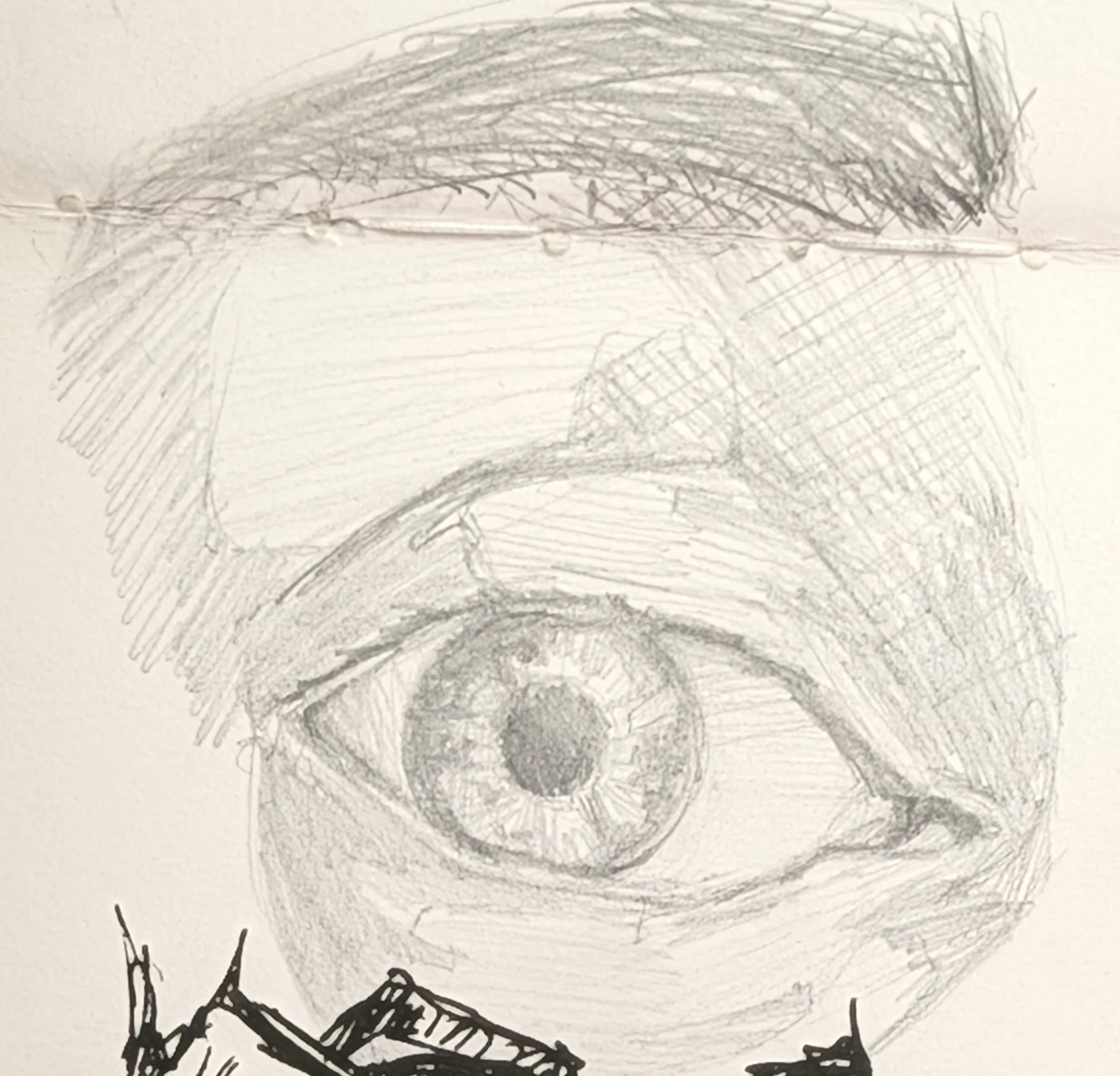
I started with one more detailed pencil rendering of an eye, working slower than I usually do. I wasn't after a finished drawing. I wanted to get familiar with the forms and to pay attention to how value describes the turn of the lid, the ball and the socket. Somewhere in the back of my mind I was also asking how the anatomy sits underneath all of it. I haven't studied anatomy properly yet (it's on the list), but drawing slowly like this is where those questions start to come up.
Ink without a net
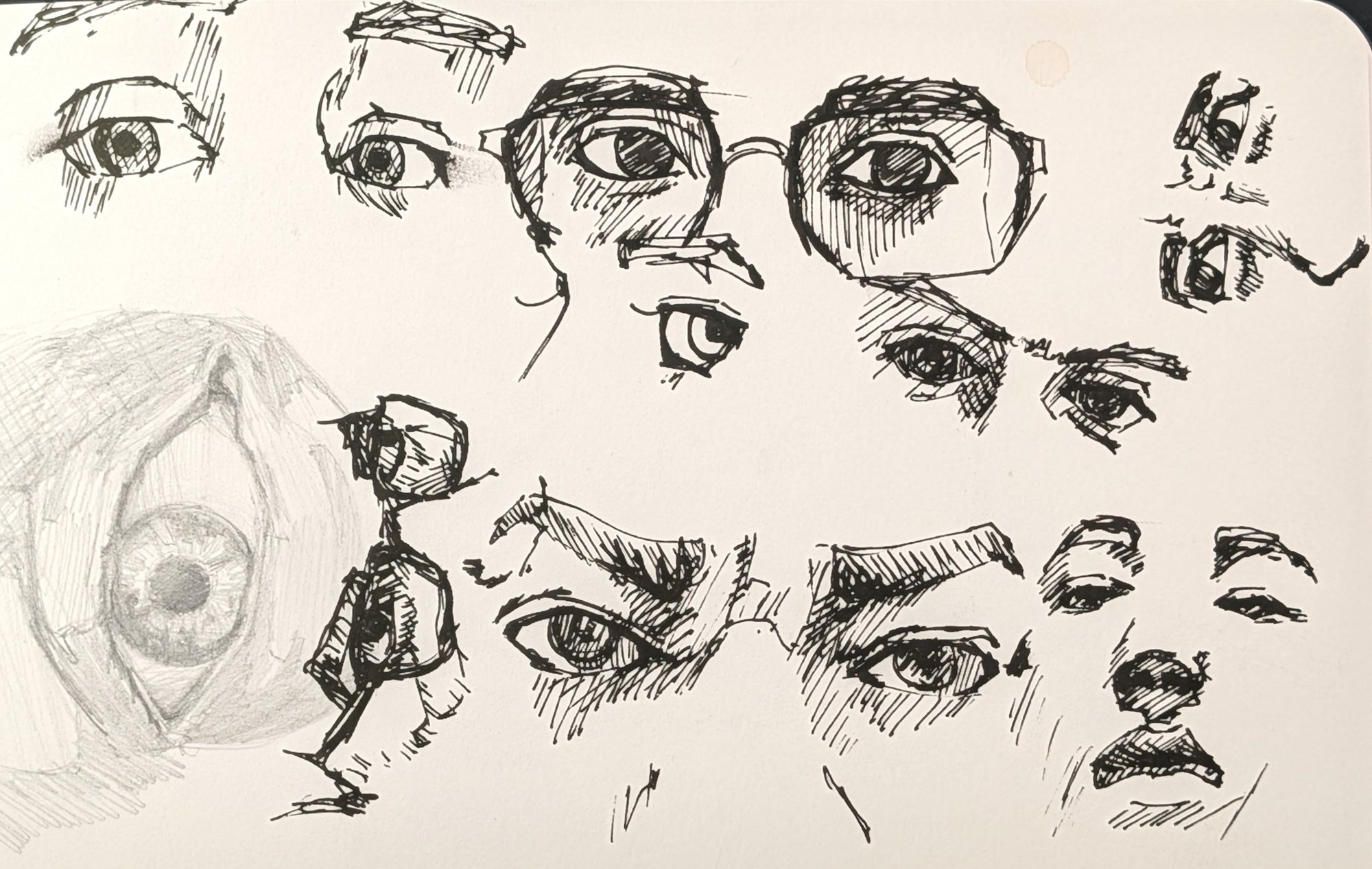
With the pencil study done I worked through somewhere between five and ten references of different eyes in ink. The change this time was that I used no pencil underdrawing at all. I did that on purpose, to test whether the pencil work had actually taught me anything, and it was harder than I expected. Without a construction stage to lean on I had to spend far more time on observational measurement before committing a single line. Some of them worked well, the pair behind glasses and the straight-on ones in particular. The three-quarter and near-profile angles, where the far side of the eye starts to disappear behind the nose, got the better of me in the end.
One thing that helped was a planning method I picked up from Sketching Scottie: before drawing anything, map the proportions and landmark positions as a scatter of dots, then draw into them. It puts something on the page to hold onto before you go in with ink. It isn't a habit for me yet, but judging by how many good artists do something like it, I'm fairly sure it gets better with practice.
Adding colour while it's fresh
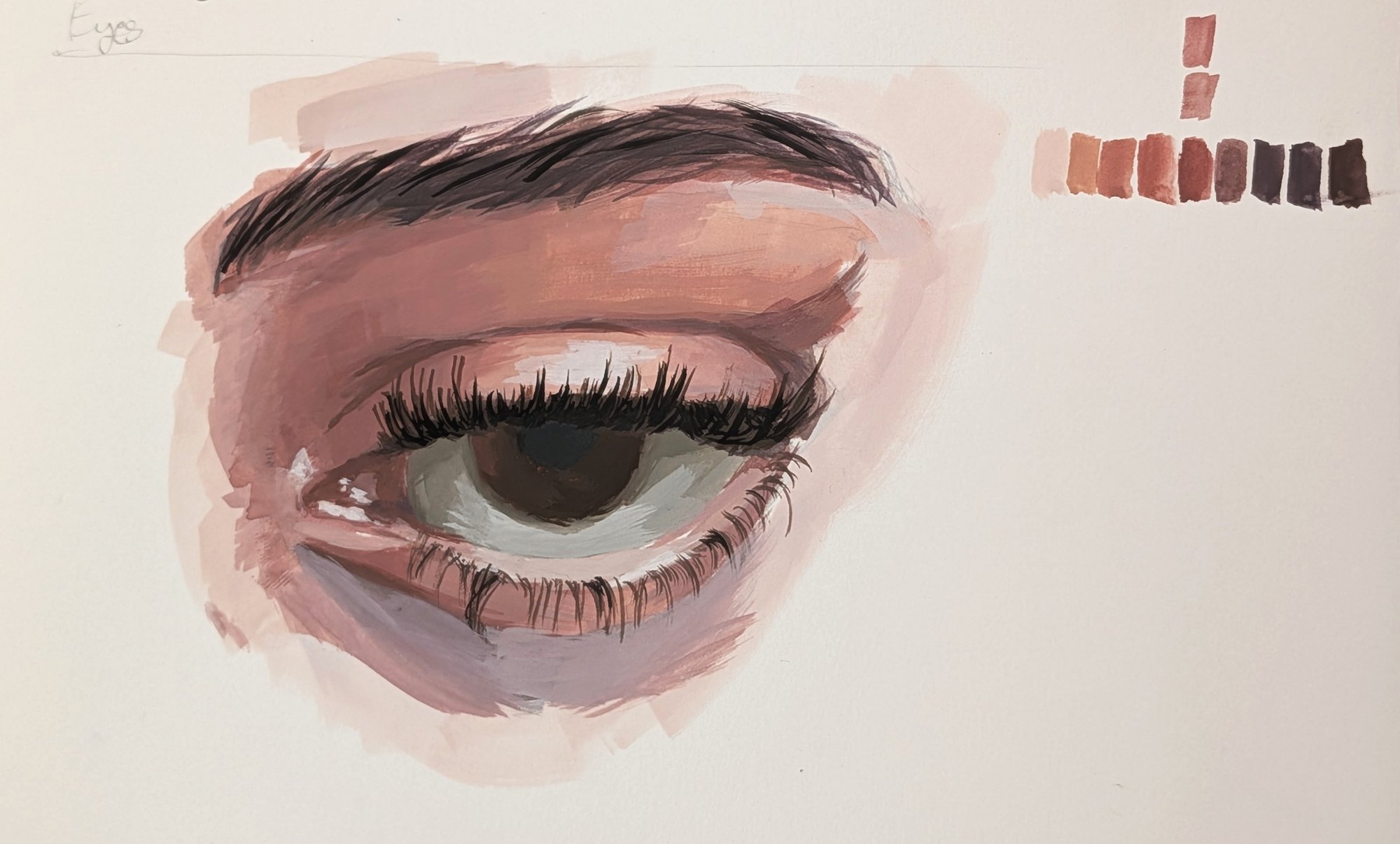
Ink strips colour out and forces you to say everything in value, which is what makes it good practice. But I always end up wanting to put colour back, and with the eye studies still fresh I wanted to try one in gouache before the lesson faded.
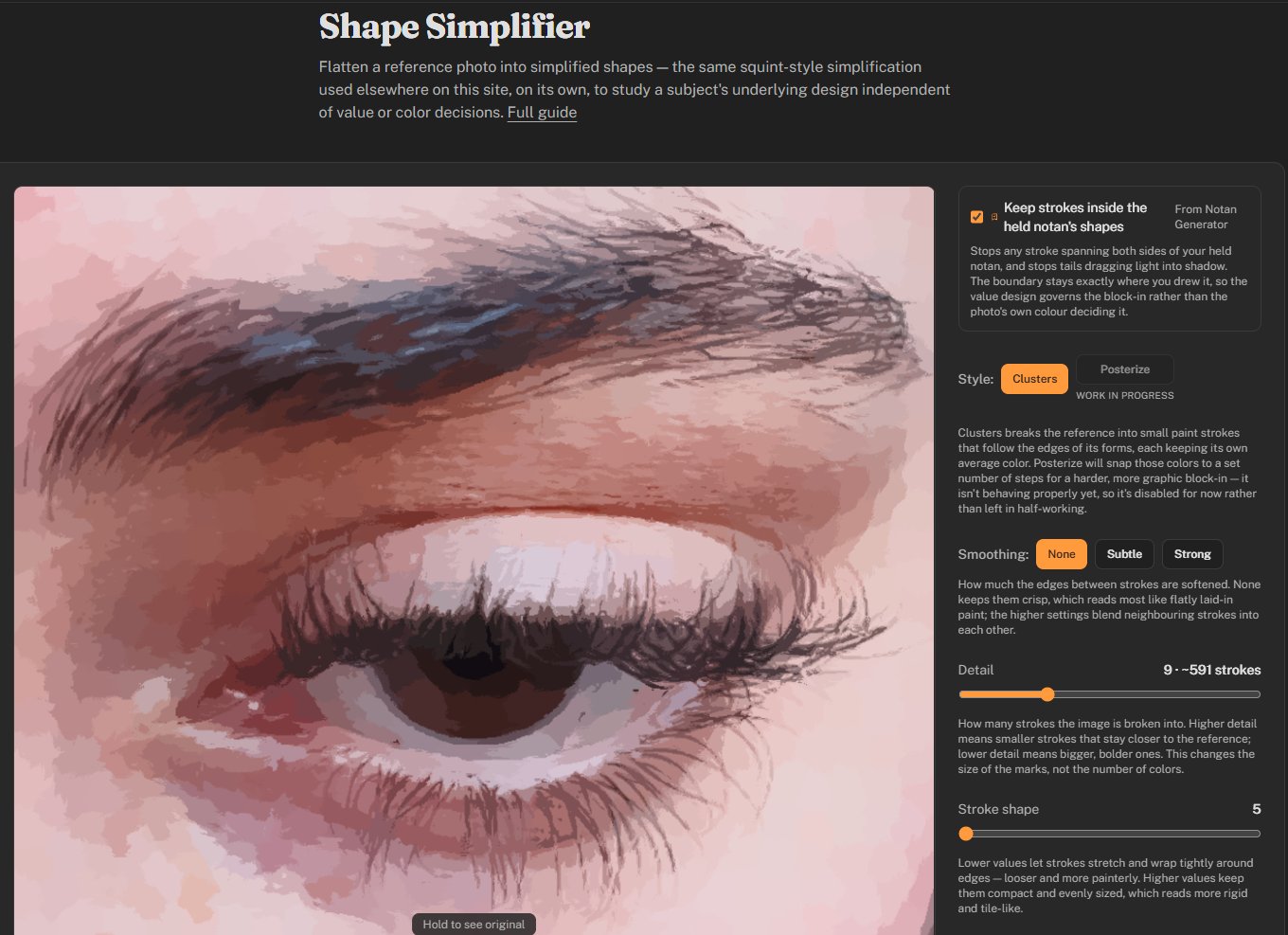
To plan it I ran the reference through two of the studio tools. Shape Simplifier first, to reduce the eye to its big shapes before I thought about any detail. Of the two, this was the more useful for deciding where the paint would actually go. I also switched on its notan mask, which held the simplified shapes inside the light and shadow split instead of letting them drift across it. It's the same two-value thinking from the ink portraits back in post one, just applied before the paint rather than after.
Then Palette Extractor to pull a working palette from the reference. I had originally reached for Paint Mixing and started picking colours by hand, but because this reference sat within a fairly narrow family of hues, the automatic extract got me to a usable palette faster than clicking away at individual spots. The extract can be downloaded from the tool as a PNG, which is what's shown here.

What went wrong
I'm happy with the result, though two things bothered me. It took far longer than a study should, and most of that was a lack of confidence in mixing, in particular laying out a value string and trusting it. You can see the string I painted beside the study. The extract gave me six steps and I mixed roughly to those, but keeping the mixes on the palette in that order lasted about ten minutes. The other thing was that once I started, the whole painting became touch-ups all the way down. I tried to go in with the darkest areas first, but I kept having to come back and push those darks deeper to give the mid-tones any contrast. I can see both of those improving with mileage, and gouache is forgiving here, as the palette reactivates and the colours I'd already mixed were still there to grab.
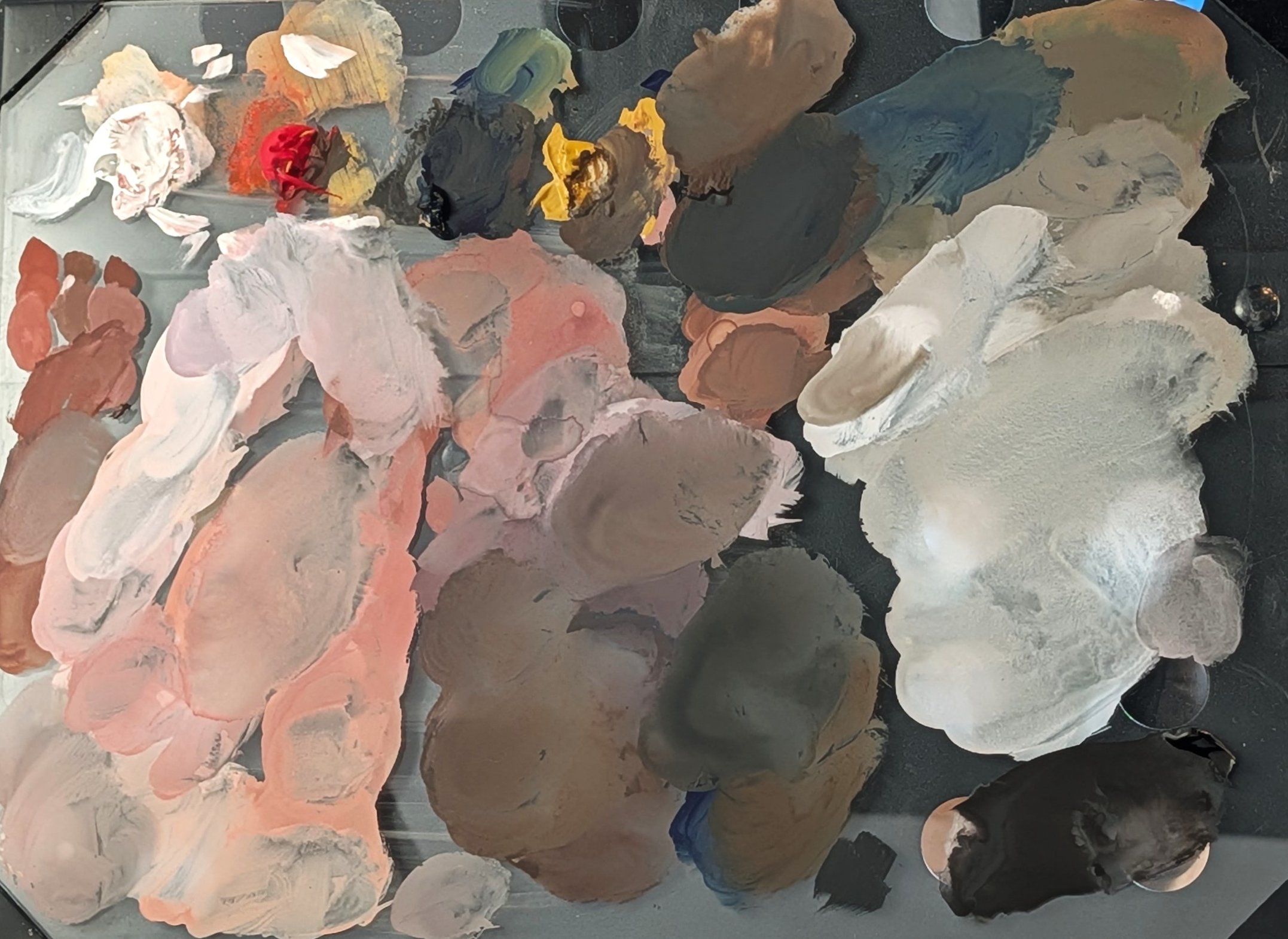
That's the palette afterwards, if anyone's interested. I go in with the best intentions of a tidy layout and a clean value string, and at some point it all goes everywhere.
Next
The ink studies are going to stay in rotation as warm-ups, partly for confidence and partly because I like the results. Gouache is turning out to be the right place to practise mixing, value, and brush economy without the stakes of a finished piece. Next up is the nose, same three stages, and I'll try to vary complexions as the series goes on rather than learning one skin tone four times.
Materials used
- Holbein Artists' Gouache
- Staedtler Pigment Liner
- Graphite pencil
- Stillman & Birn Zeta sketchbook
- MasterTouch Aquamarine watercolour flat, size 4
- Princeton Aqua Elite round, size 8