Painting Lips in Gouache: The Values Held, the Hues Didn't
September 11, 2026
I said at the end of the nose post that I'd put a value wash down first, before any colour, so I'd stop chasing the darks. So that's what I did with the mouth. It didn't fix everything, but it changed what went wrong, which is probably the most useful thing to have come out of this series so far.
Ink, two sheets this time
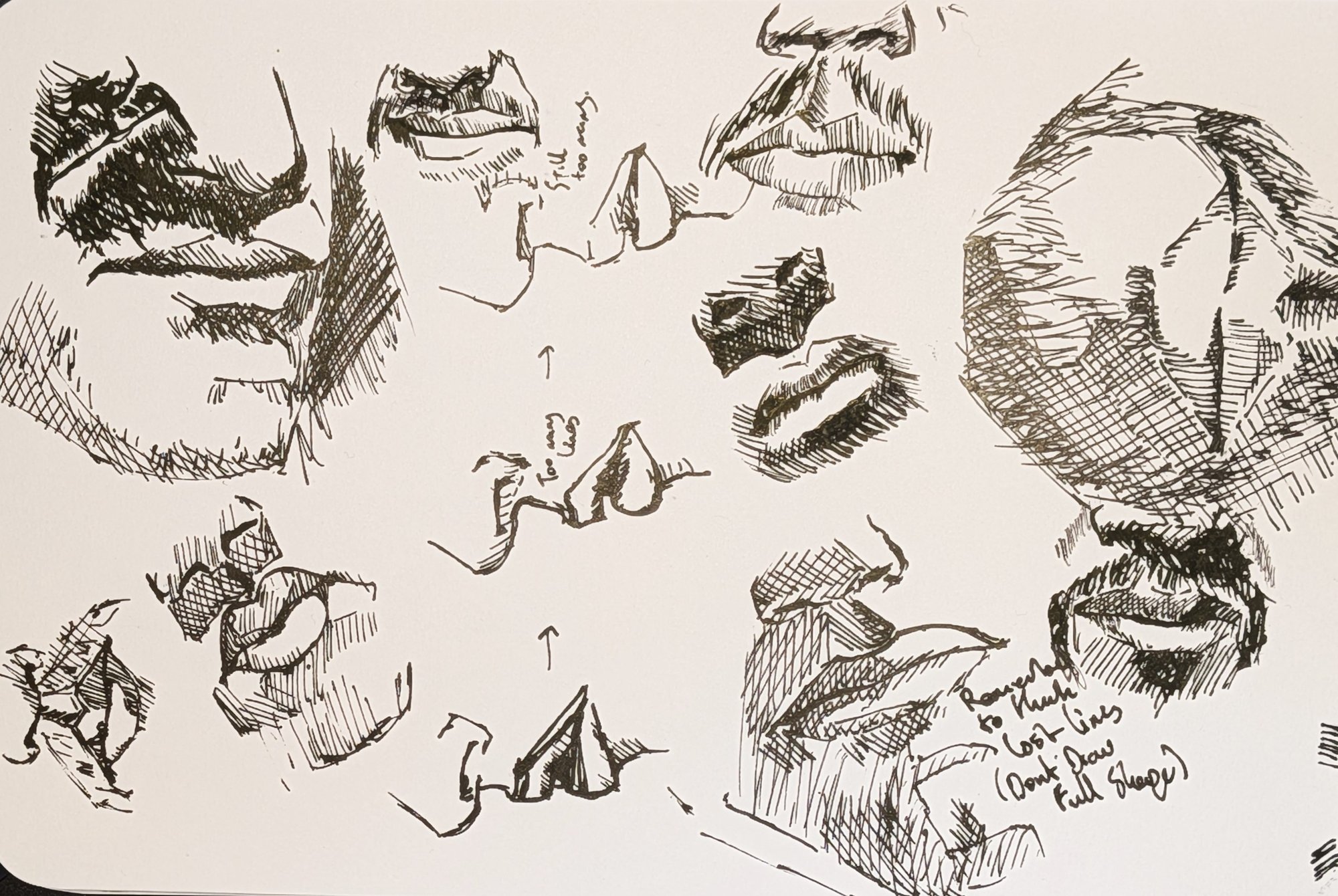
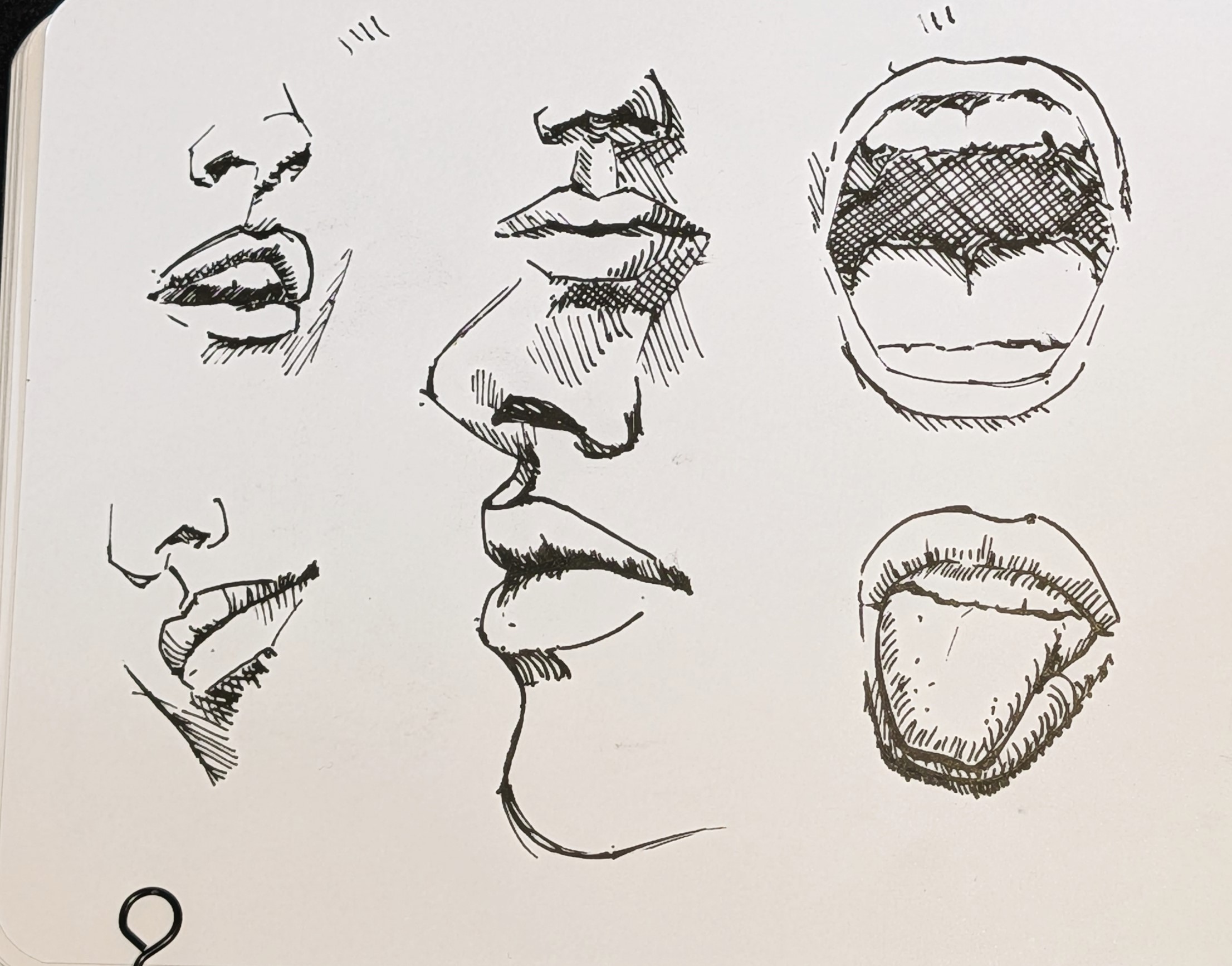
The first sheet went in the same way as the eyes and the nose: no pencil underneath, dot-mapping to hold the proportions, then straight to ink. It didn't work the way it had for the other two features. Mouths rely on line more than either of them, and I wasn't getting results I could learn from, so for the second sheet I put the pencil back under the ink, which is fair enough, as finding out where the net is still needed is the point of the exercise. The note I wrote to myself on the first sheet is the lesson from both: keep lost lines, don't draw the full shape. A mouth drawn as a complete outline goes stiff straight away. The ones that work are the ones where the line disappears into the light side and the shadow shapes carry the rest.
The wash first
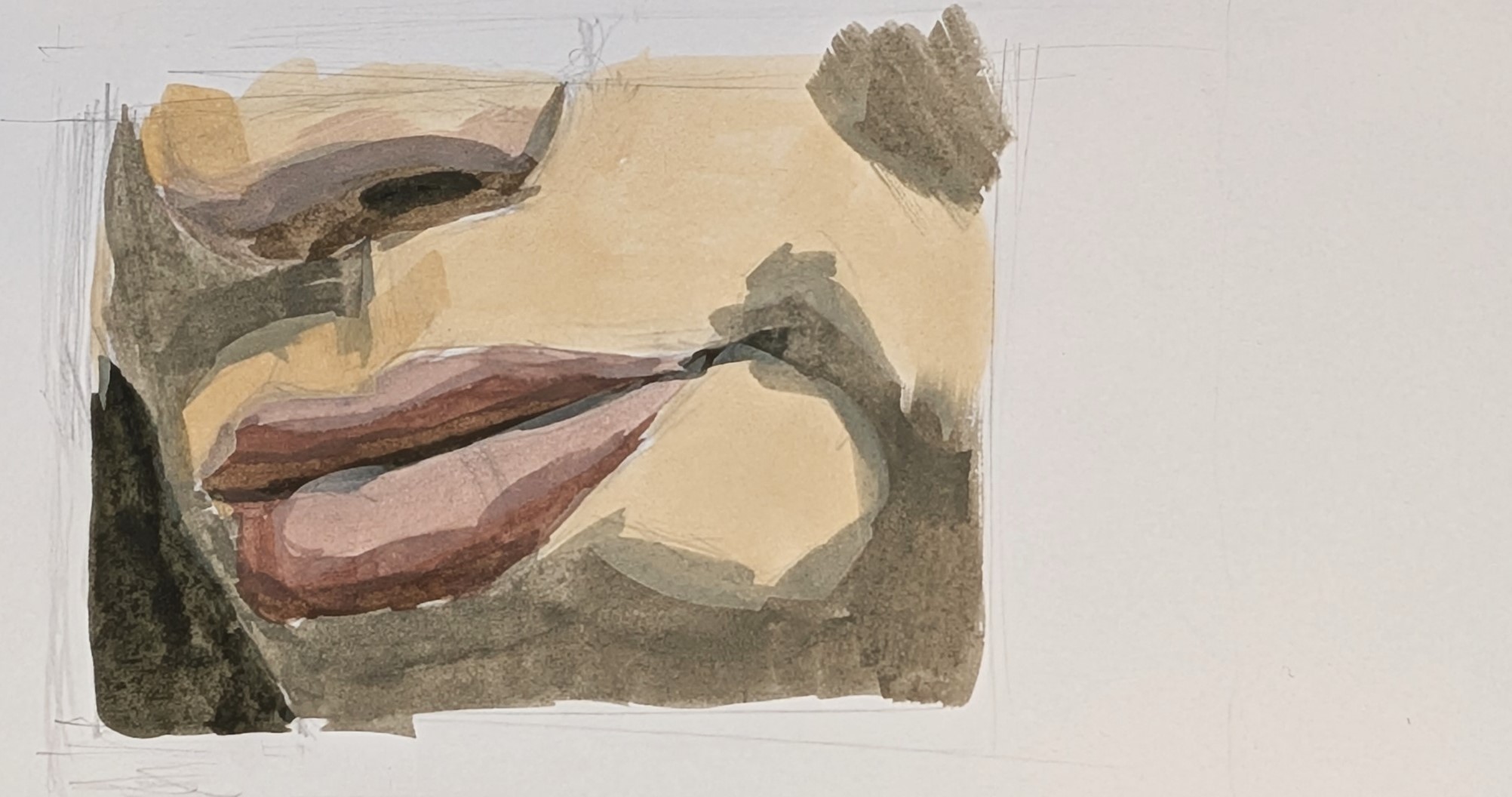
Before mixing any colour I put down a thin value wash over the whole study, following the notan from Shape Simplifier: light side, shadow side and the dark of the mouth, and no more than that. It helped, though in a plainer way than I'd expected. Its main job turned out to be getting rid of the white of the page, so every colour that followed was judged against a mid-tone rather than against blinding paper. With the darks at least roughed in underneath, I wasn't discovering them halfway through and pushing everything else around to compensate, which is what happened with the nose.
Two palettes, two value strings
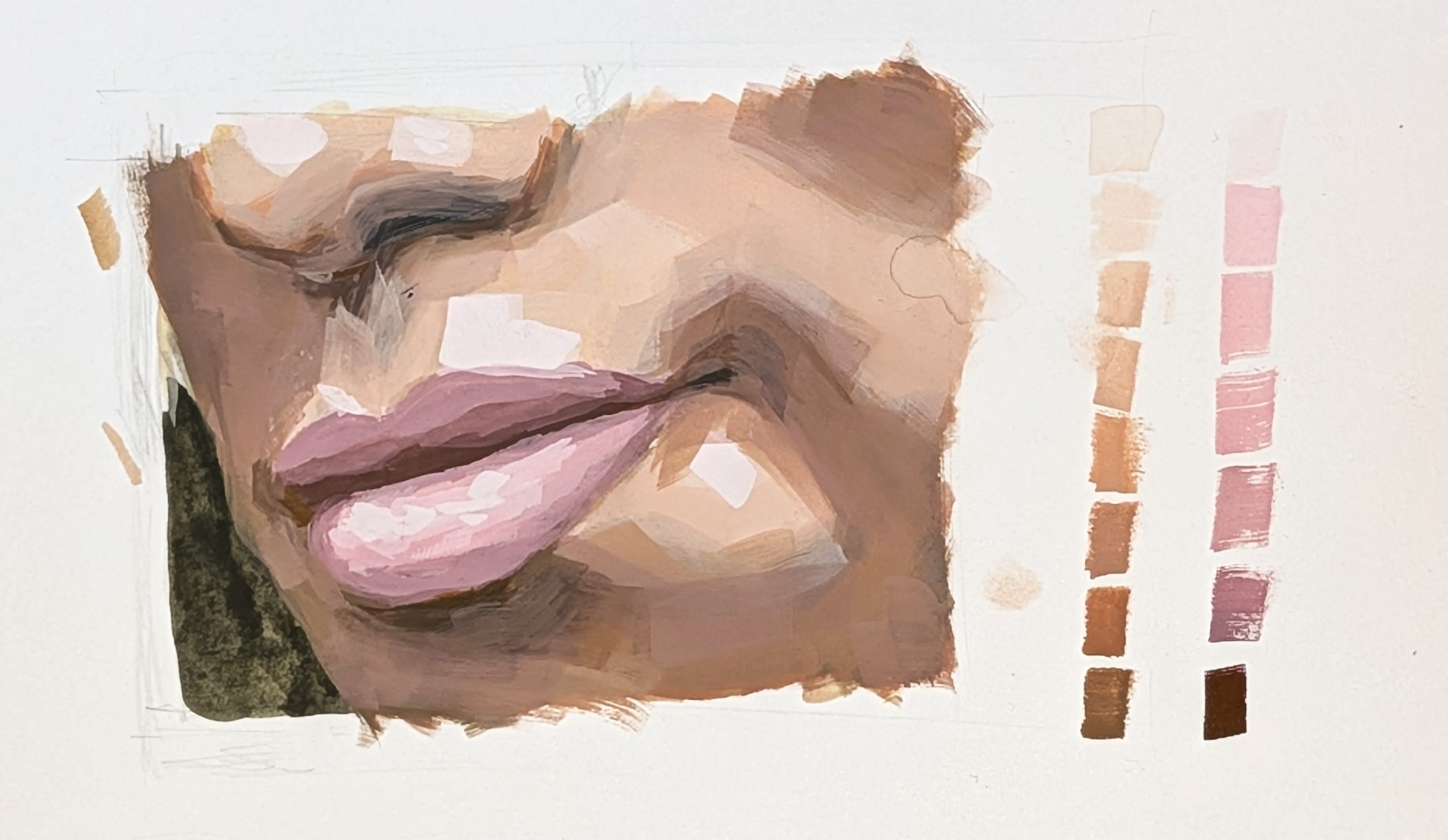
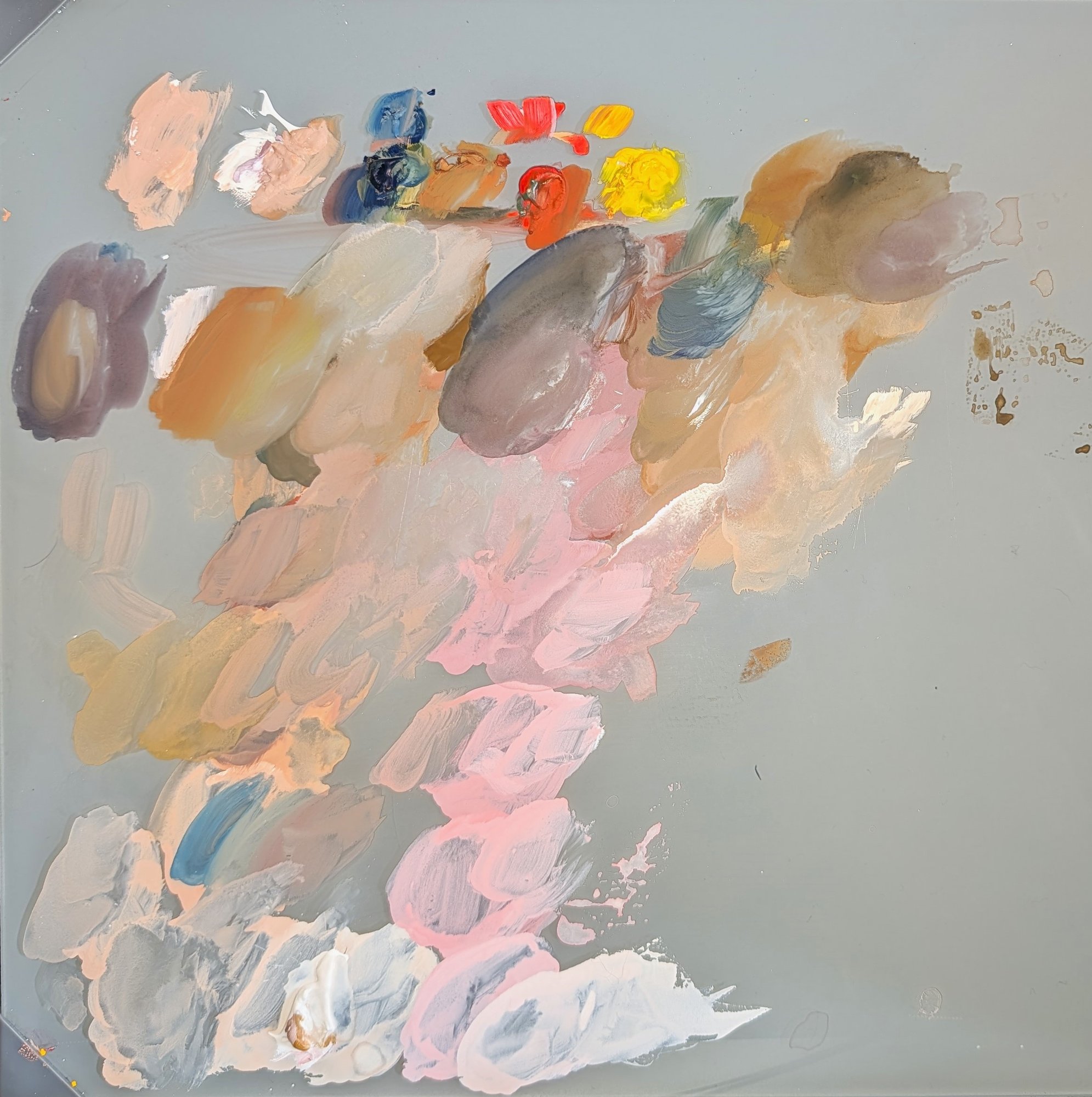
The other change was in planning the colour. This reference has two distinct hue families, the skin and the lips, and until now Palette Extractor would have handed me one mixed set. So I used Paint Mixing instead. I sampled the skin and saved those samples as one palette, then sampled the lips and saved them as a second, and each palette gets its own bar and its own ten-step value scale. That's what the two painted strings beside the study are. Being able to see each family's value spread on its own, rather than tangled up together, is something I'd been wanting for a while.
I tried to stay close to those strings on the palette. They still got muddied towards the end, but the logic is readable this time, and I'm learning not to be precious when a mix runs out. Remixing the batch is part of the practice.
What went wrong: hue
The values held, then, but the colour of the shadows didn't. I built the darks from the same mother mix as the lights, which should have kept them related, but something was missing and the shadow side pulled the whole study flat. I kept adjusting the shadow hue, bringing more of the lip colour into it to get some harmony back, and it helped a little each time, but it was slow and I was getting frustrated. At about the hour mark I called it, marked it down as something to learn from and stopped, because a one-hour study that turns into a three-hour problem-solving session isn't a study any more.
Part of the trouble started before the paint. The drawing underneath wasn't confident, and that carried all the way through, as a shaky lay-in doesn't get any less shaky once there's colour on it.
The pattern behind it
Looking back over the last few studies, the primaries I've mixed from have been different each time. That explains a lot. I reach for a mix that worked last time and can't understand why it doesn't come, when the answer is that the tubes on the palette aren't the same tubes. So the next studies use one fixed set of three, until I know the mixes by hand instead of taking them from the reference, and only then will I let the palette grow towards a split primary.
Next
Ears finish the set. After that, an artist study: Emily Hughes Art paints gouache portraits whose colour pops in a way mine doesn't yet, and I want to take one apart to see how she handles shadow shapes and keeps the colour alive in them. Then a run of complexion studies on that one fixed palette, to build up the mixing memory. As with Six Heads, varying the complexion is the point. The longer aim is to get out from under the reference photo's palette altogether and describe form with colour I've chosen myself rather than copied from the photo.
Materials used
- Holbein Artists' Gouache
- Staedtler Pigment Liner
- Graphite pencil
- Stillman & Birn Zeta sketchbook
- MasterTouch Aquamarine watercolour flat, size 4
- Princeton Aqua Elite round, size 8