Painting an Ear in Gouache: Three Primaries, Then Four
September 12, 2026
Ears finish the set. Four features, the same three stages each time, and the mouth post ended with a rule for this one: one fixed set of three primaries and no reaching for extra tubes. So the palette was Deep Cadmium Yellow, Carmine, Prussian Blue and white. The rule didn't last long, as it turned out.
Pencil, then ink without a net
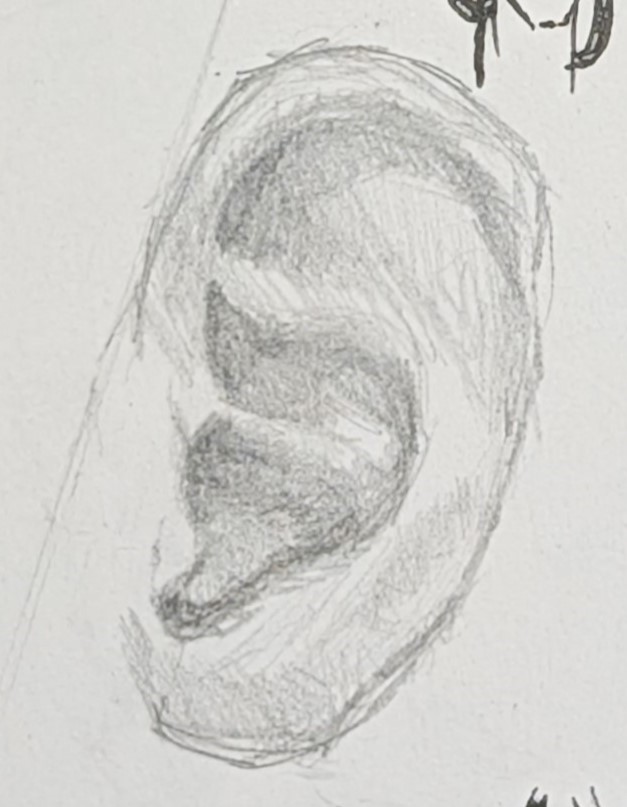
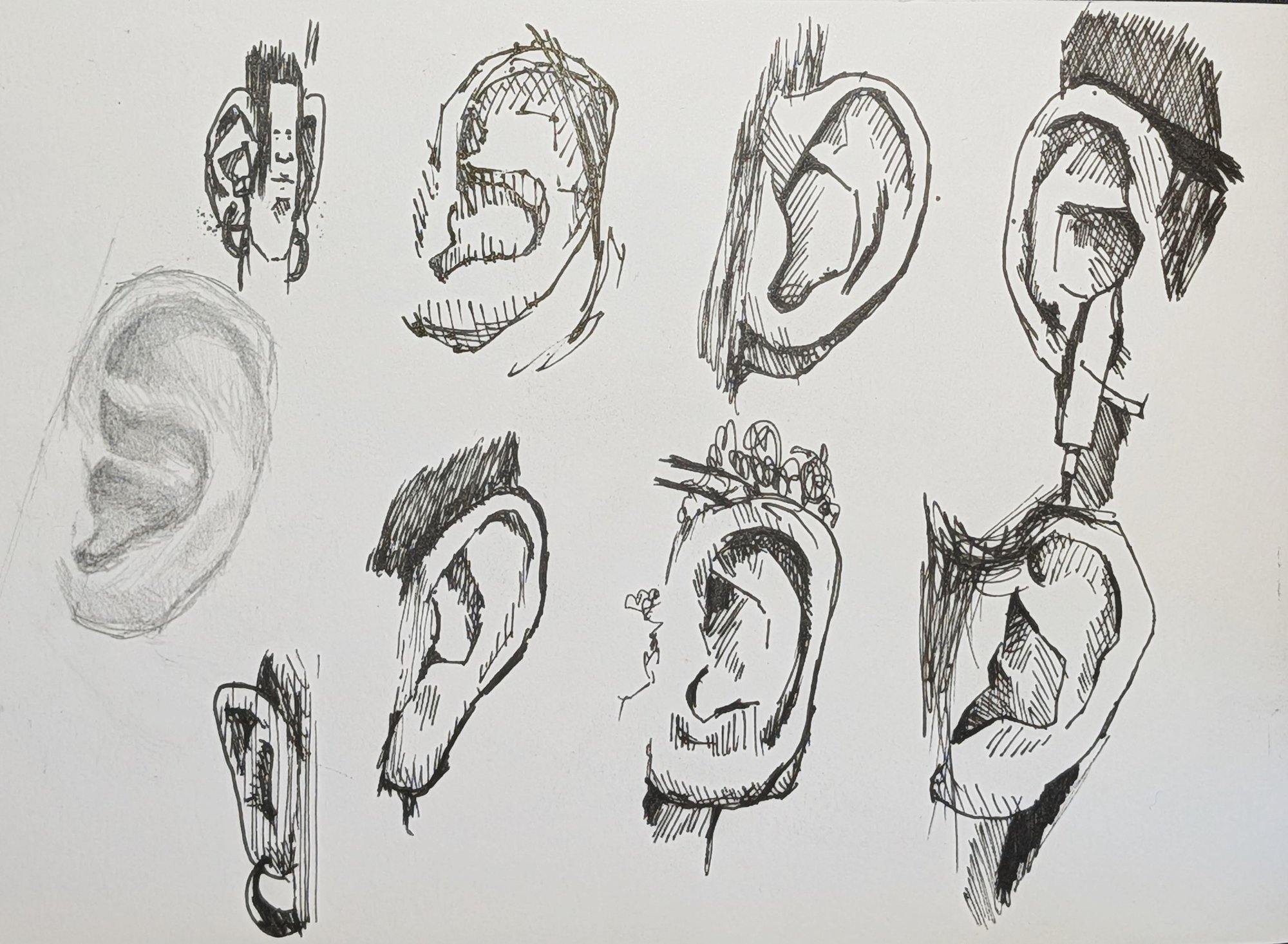
One slow pencil ear to learn the form, then a sheet straight in with the fineliner, no pencil, the same way as the eyes and nose. Ears took to it better than mouths did: they're built from a few hard shapes inside a hard outline, so once the proportions were dotted in the ink had something to hold onto. What kept catching me out was the relationship between the ear and what's around it, the hair behind it and the jaw in front, which is what decides whether it reads as attached to a head or floating.
Breaking out of the reference's colour
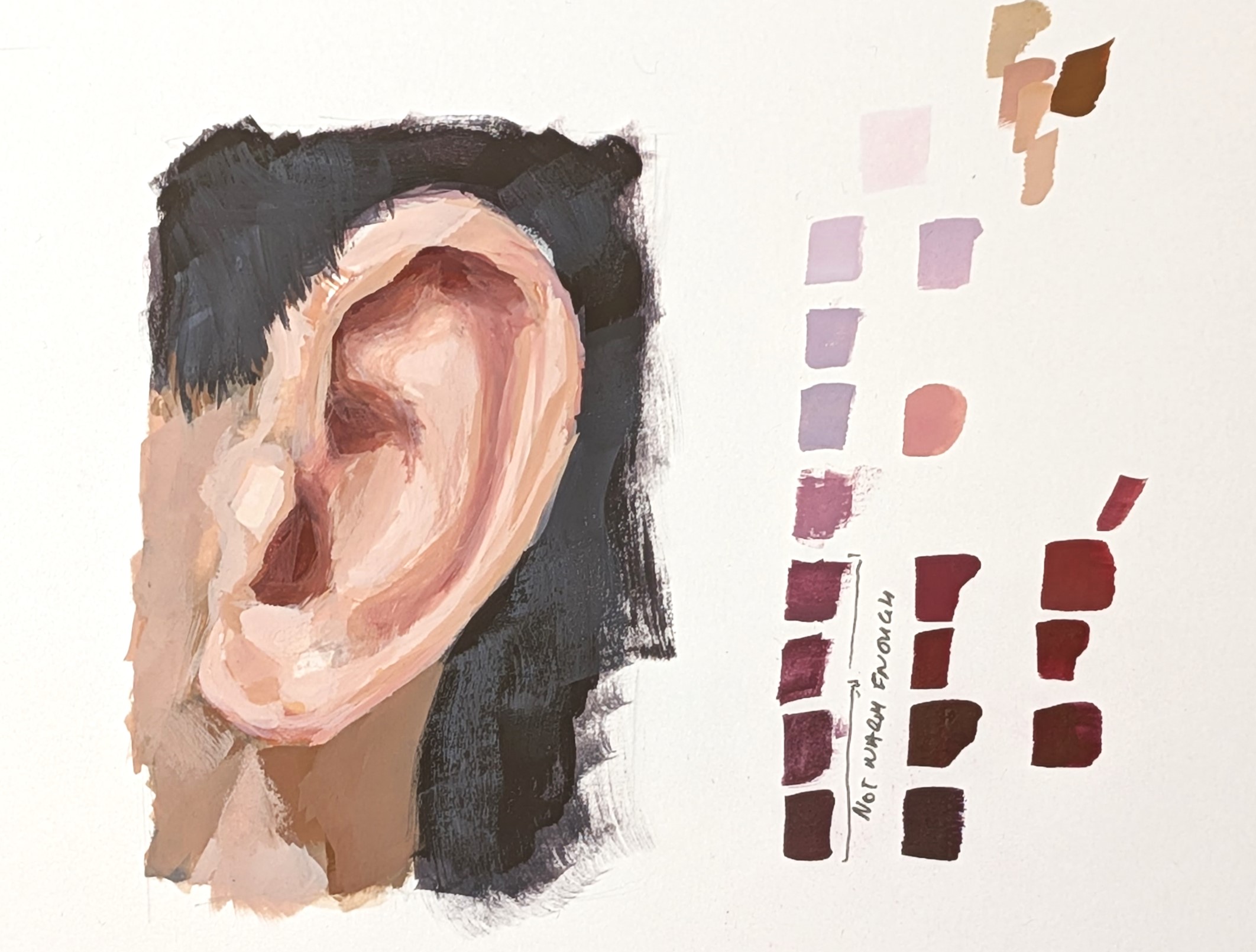
The plan for the paint was more ambitious than the previous three. I ran the reference through Shape Simplifier with the notan mask on and Palette Extractor as usual, but rather than matching the extracted colours I wanted to separate the lights and darks by temperature, warm against cool, and get out from under the reference's own colour for the first time.
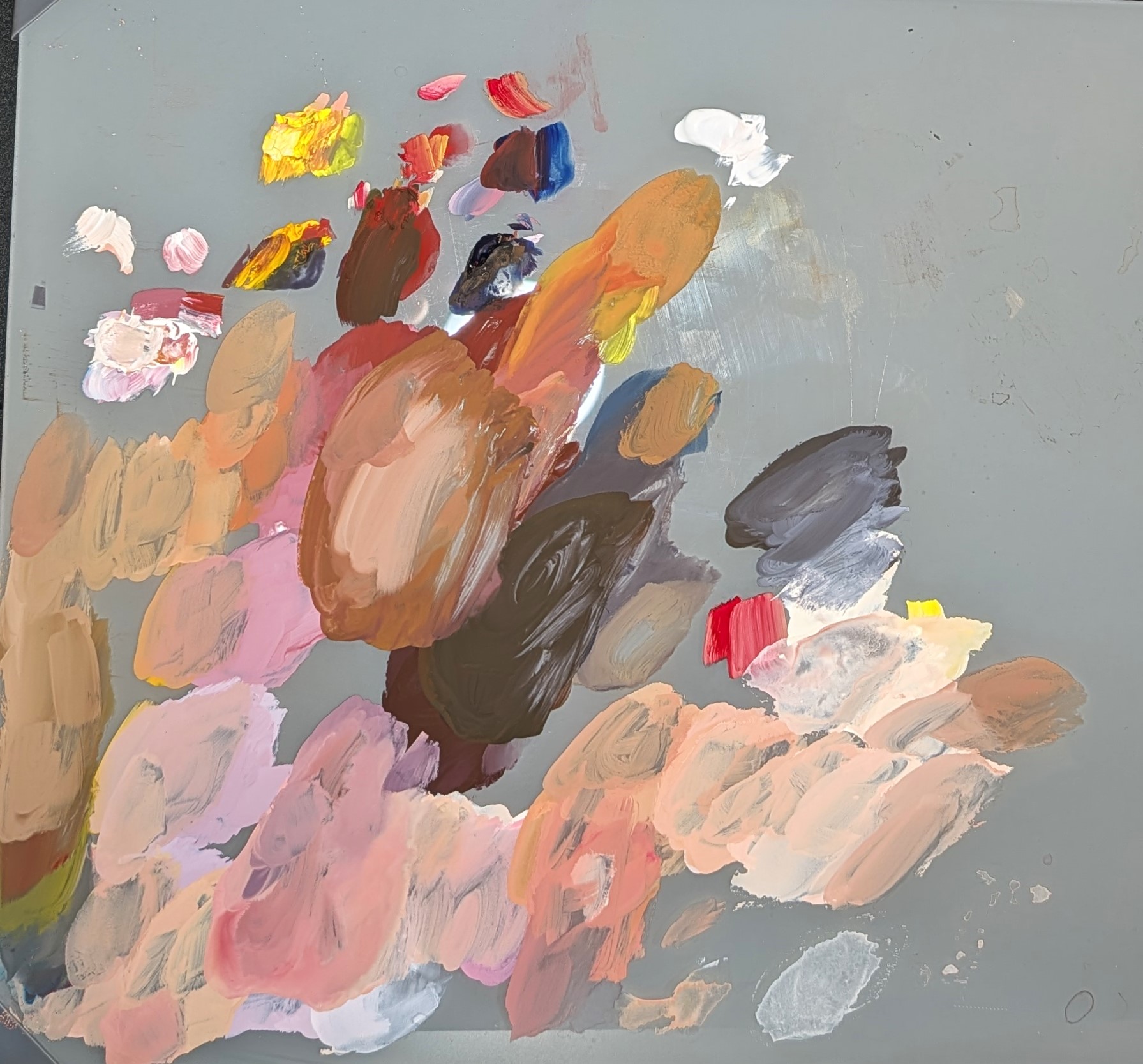
The swatches beside the study are where that went. The first value string went violet: carmine and Prussian blue lightened with white cool off into purple very fast, and a purple string was never going to read as skin. I wrote "not warm enough" under it and started again. The shadow warmth I'd mixed I was happy with. The trouble was trying to lighten and cool at the same time with only those three tubes, and that is where the rule broke. I brought in Lemon Yellow, a cooler yellow, so the lights could go up in value without sliding towards violet, and three primaries became four inside the first half hour.
Nearly abandoned
There was a stretch in the middle where I thought the painting was lost and was ready to start over. I didn't; I went back over the layers and built it up again until it was something I was happier to finish, and that's a better outcome than a clean restart would have been. But it needed a hard stop, again. I'm getting better at recognising the point where a study has stopped teaching me anything and is just eating time, and at stopping there, but it still takes an act of will.
The thing worth noticing
Looking back, what interests me most is how easily the plan changed once the brush was moving, more than the violet string or the fourth tube. I set a rule in the last post and abandoned it at the first difficulty, and I can't now know what the painting would have looked like if I'd held to the first value string and pushed through. Sticking to a decision made at the outset, all the way through a painting, is plainly a skill of its own, and I don't have it yet.
Next
That's the four features done: eyes, nose, mouth, ear. The mixing needs far more mileage before it stretches to more complexions and more lighting, and as with Six Heads that's the next stretch of practice. But the next post answers this one directly. I'll take a reference, turn it black and white and paint it with two colours chosen at the start and not added to, a palette I can't wander from, so that for once I find out what sticking with one looks like.
Materials used
- Holbein Artists' Gouache: Deep Cadmium Yellow, Carmine, Prussian Blue, Lemon Yellow, white
- Staedtler Pigment Liner
- Graphite pencil
- Stillman & Birn Zeta sketchbook
- MasterTouch Aquamarine watercolour flat, size 4
- Princeton Aqua Elite round, size 8